Helping children participate in everyday life
/ Services / Pediatric Occupational Therapy
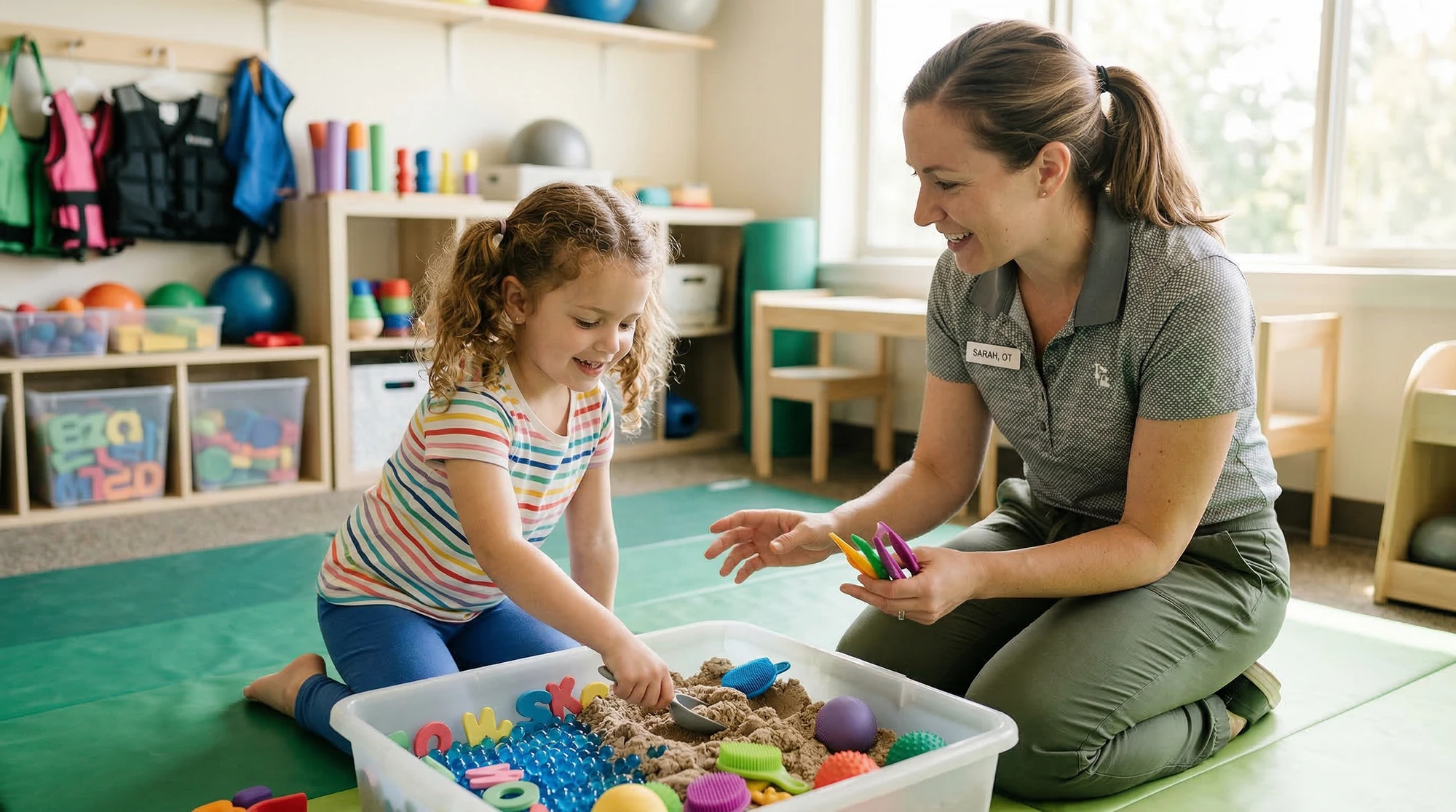
Supporting everyday participation
At Alabama Pediatric Therapy Services, pediatric occupational therapy focuses on helping children take part more fully in daily activities—at home, at school, and in the world around them.
Occupational therapy isn’t about fixing a child. It’s about understanding how they move through their day and supporting the skills that help them feel capable, regulated, and confident in everyday moments.
What occupational therapy supports
Occupational therapy may be helpful when a child is having difficulty with tasks that are part of daily life. These challenges can look different for every child and may show up gradually or suddenly.
OT at APTS may support:
- Fine motor skills, such as grasping, handwriting, or using tools
- Sensory processing and regulation
- Feeding therapy and oral motor skill development
- Daily living skills like dressing, feeding, or hygiene routines
- Attention, organization, and task participation
- Play skills and engagement with peers
- Visual-motor integration and coordination
Families don’t need to know exactly what category a concern fits into.
If something feels hard for your child—or for your family—we can help explore whether occupational therapy may be supportive.
Our approach to occupational therapy
Occupational therapy at APTS is play-based, individualized, and relationship-centered.
Children learn best when they feel safe, engaged, and understood. Sessions are designed to feel encouraging and purposeful, while still working toward meaningful goals.
Our occupational therapists:
- Meet children where they are developmentally and emotionally
- Use play and everyday activities as therapeutic tools
- Adjust strategies to fit real family routines
- Communicate clearly with caregivers about progress and next steps
Therapy is not one-size-fits-all. Goals are shaped collaboratively and revisited as children grow and change.
Partnering with families
Families are an essential part of occupational therapy.
We believe parents and caregivers bring deep knowledge of their child’s strengths, challenges, and daily realities. That insight guides our work.
Throughout the therapy process, families can expect:
- Throughout the therapy process, families can expect:
- Practical strategies that make sense at home and school
- Ongoing communication and shared problem-solving
- Respect for each family’s pace, priorities, and capacity
Our goal is to support progress that carries beyond the therapy room and into everyday life.
Occupational therapy within a team approach
Many children benefit from coordinated support across services. When appropriate, occupational therapists collaborate with physical therapists, speech therapists, and Learning Center staff to ensure care feels aligned and thoughtful.
This collaboration helps:
- Reduce fragmentation of care
- Support consistent goals across settings
- Adjust services as needs evolve over time
Families are included in these conversations, and decisions are made together.