Supporting communication, connection, and understanding
/ Services / Pediatric Speech Therapy
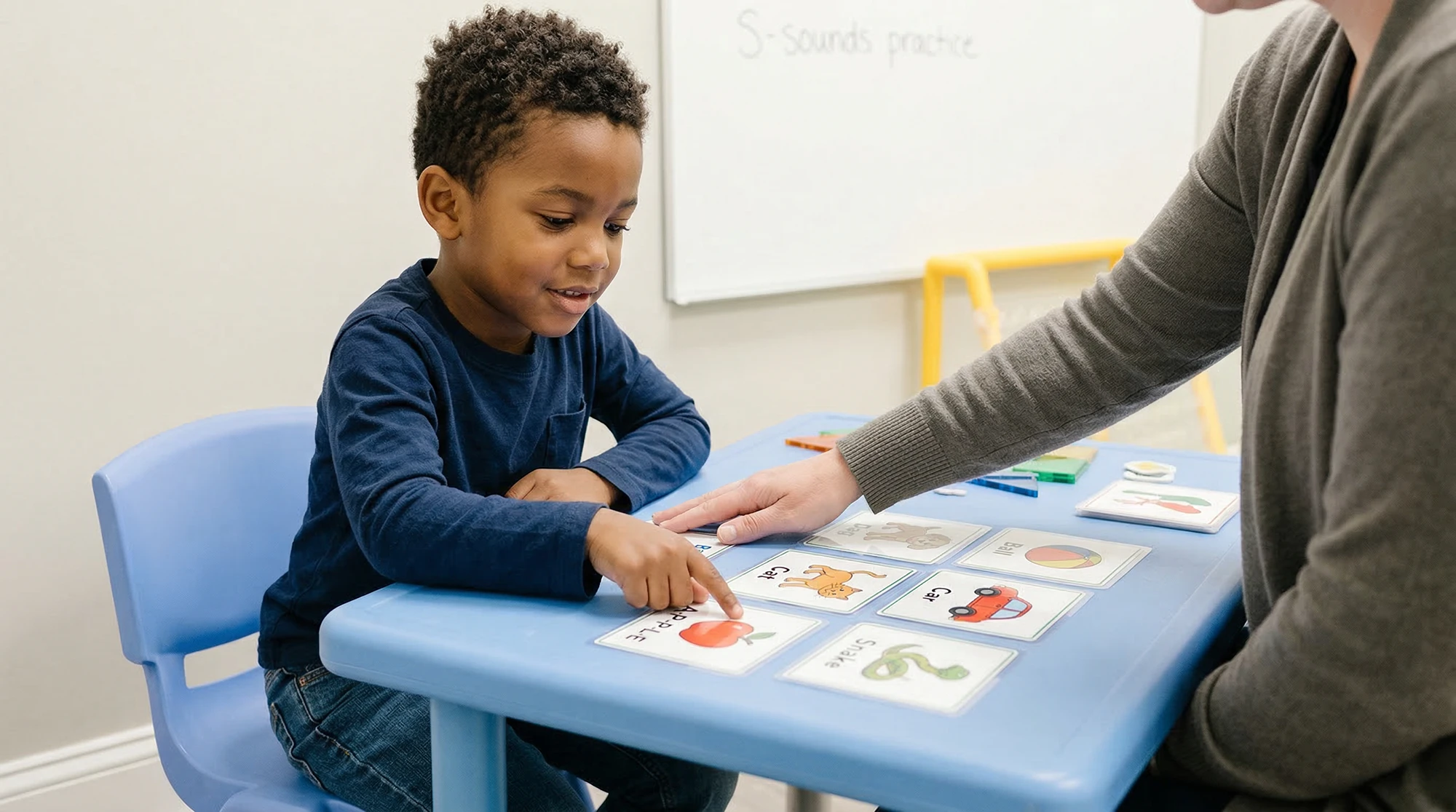
Supporting Expression in Everyday Life
At Alabama Pediatric Therapy Services, pediatric speech therapy supports how children communicate, understand language, and connect with the people around them.
Communication looks different for every child. Some children need support finding words. Others need help understanding language, producing sounds clearly, or navigating social communication. Speech therapy is about meeting children where they are and helping them express themselves in ways that feel meaningful and achievable.
What speech therapy supports
Speech therapy may be helpful when a child is experiencing challenges related to communication, language, or feeding. These concerns can present in many ways and may change over time.
Speech therapy at APTS may support:
- Expressive language (using words, phrases, or other forms of communication)
- Receptive language (understanding directions, questions, or concepts)
- Speech sound development and clarity
- Social communication and interaction
- Feeding or oral-motor skills, when appropriate
Families don’t need to know exactly what type of speech therapy their child may need. If communication feels difficult or limiting, we can help explore whether speech therapy may be supportive.
Our approach to speech therapy
Speech therapy at APTS is child-centered, supportive, and individualized.
Children learn best when they feel safe, engaged, and understood. Sessions are designed to be interactive and responsive to each child’s communication style, strengths, and interests.
Our speech therapists:
- Use play and meaningful interaction as the foundation of therapy
- Adapt strategies to fit each child’s needs and pace
- Focus on functional communication that supports daily life
- Share progress and strategies with families in clear, practical ways
The goal is not just skill-building, but confidence and connection.
Partnering with families
Families are essential partners in speech therapy.
We believe communication grows through everyday interactions: at home, at school, and in daily routines. That’s why collaboration with caregivers is a core part of our work.
Families can expect:
- Clear explanations in plain language
- Practical ideas that can be used outside of sessions
- Respect for family priorities and cultural context
- Respect for family priorities and capacity
Our role is to support communication in ways that feel natural and sustainable for each family.
Speech therapy within coordinated care
When appropriate, speech therapists collaborate with occupational therapists, physical therapists, and Learning Center staff to support the whole child.
This collaboration helps ensure:
- Consistent goals across services
- Reduced fragmentation of care
- Thoughtful adjustments as children grow and communication needs evolve
Families are included in these conversations and decisions throughout the process.